
With the high-rise commercial buildings becoming more sophisticated, the requirement for a smarter Building Management System (BMS) that offers flexibility, adaptability, and efficiency is also increasing. A properly implemented BMS not only increases occupant comfort but also drives energy savings, operational cost reductions, and enables facilities for the future of IoT and advanced analytics.
To get a scalable BMS, you need to think of it all and design for it from the start, right through to the end of life. Here is a few thing to keep in mind when creating BMS architecture for high-value commercial skyscrapers.
Load and Zoning Analysis
The success of a BMS starts with an accurate load and zoning calculation. Commercial taller buildings usually include various room types such as open plan offices, meeting rooms, common areas, the plant and service zones: all of them with different specific HVAC and energy needs.
Rational zoning provides accurate modulation of heating, cooling, and ventilation. For instance, perimeter zones that experience solar gain have a different set of control strategies than interior office spaces. Precise load calculations result in properly-sized equipment, thus eliminating over-engineering, which would otherwise compromise system efficiency and performance.
Control Store’s programmable controllers accommodate dynamic zoning schemes that can be quickly accommodated as tenancy layouts or activities change.
Defining an HVAC Control Strategy
After zoning is determined, creating an HVAC control strategy is critical. This dictates how equipment (chillers, boilers, Ahus, VAV boxes, or exhaust systems) work together.
Demand-based control strategies are common in contemporary commercial facilities, where building equipment consumes energy only when needed. The time scheduling, occupancy-based control, and dynamic set points are the key to energy saving by keeping a high level of comfort.
Control Store’s HVAC control products utilize sophisticated logic that is specifically engineered to ensure fully coordinated operation and reliable performance in large multi-story commercial buildings.
Intelligent positioning of the sensors for precision measurement
Sensors are the data spine of a BMS. Proper sensor positioning and type are essential in providing accurate feedback to the system and ensuring reliable control.
Typical sensors used in commercial high-rise settings include the following:
- Space and supply air temperature sensors
- Humidity sensor to help prevent mold. The following are the additional features: aurants.
- CO₂ detectors for demand-based ventilation
- Air velocity and differential pressure sensors for ductwork airflow and building pressurization control
Sensors should be installed in a location that accurately represents the environment, free from direct light/sunlight, air drafts, or heat sources. Control Store provides a complete line of sensors for efficient and dependable data delivery throughout all building areas.
Integration of Valves, Actuators, and Dampers
Servos, solenoids, and dampers convert control signals to action – opening and closing airflow, water flow, and pressure. In a scalable BMS, these parts need to be highly reliable, responsive, and absolutely compatible with the control platform.
Heating and chilled water systems control specific valves (motorized), air distribution controls the damper actuators, and terminal unit controls require sensors and controllers to interface with them. Control Store actuators and valves are designed for the commercial HVAC market, providing reliable performance with straightforward servicing.
Energy-Saving with Other Speed Variations
“VSDs play a critical part in today’s commercial buildings. By increasing and decreasing the motor velocity as required, VSDs can deliver substantial energy savings and reduce wear of the mechanism.
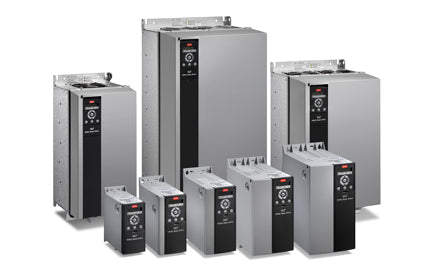
With VSDs essentially incorporated into pumps, fans, and ventilation systems, the BMS is able to have very accurate control of water flow and airflow. Control Store’s VSD products provide an easy drop-in to BMS systems for energy-efficient operation, increased reliability, and longer asset life.
IoT and Networking Integration Key to Future-Proofing
Scalability is about designing for unknown future technologies. With commercial buildings becoming more data-oriented, integration with IoT devices, remote monitoring systems, and analytics solutions is becoming increasingly key. ngly key.
For a future-proof BMS, features are the use of a redundant network, the security of the communication, and support for new technologies. Control Store’s protocol converters, networking products, and IoT-ready offerings enable building managers to grow system capabilities without making significant changes to their existing infrastructure.
This opens up possibilities for advanced features like cloud monitoring, predictive maintenance, and energy performance tuning.
A Robust Commercial BMS with Control Store
'Modular constructions that provide a combination of the following: VSD controllers, sensors, actuators, and network equipment...” Assemblable systems allowing integrators to design robust BMS services for small commercial high-rise buildings. Through proper design considerations and product choices, a BMS is able to respond to new demands while also providing long-term efficiency, comfort, and control.
A well-architected BMS is no longer just a building system—it’s an essential investment in operational efficiency and green commercial facilities.